Sidste Nyt fra Albanien, Kosóva og Makedonien

The Latest News from Albania, Kosóva and Macedonia


# 279 - 11.11.2005    Version 1.1      PDF for printing

Udgiver: Bjørn Andersen

Publisher: Bjoern Andersen


Landene ved Adriaterhavet. EU-kort


»Sidste Nyt om Albanien, Kosóva og Makedonien« hører til et web-site om de Balkan-lande hvor der lever mange Albanere: http://bjoerna.dk/albanerne.htm; her kan du også finde »gamle nyheder«, anmeldelser, links og en Balkan Brevkasse. »Sidste Nyt« sættes på nettet hver torsdag aften / fredag morgen hvor der sendes besked til dem der ønsker det. Bestilling / afbestilling sker ved at sende en e-mail med teksten »Nyheder udbedes« / »Nyheder afmeldes«. Nyheder, materiale, kommentarer og spørgsmål modtages meget gerne, både om småting og større ting. Send en e-mail. Tilsvarende hvis du opdager en fejl. Fejl vil blive rettet hurtigst muligt. »Sidste Nyt« og http://bjoerna.dk/albanerne.htm drives non-profit og uden finansiering »udefra«. Hvis du vil støtte udgivelsen kan du lettest gøre det ved at købe én eller flere af mine bøger. Send gerne en mail hvis der er - små eller store - tekniske problemer. Bemærkninger om EDB-sikkerhed.


The framework of The Latest News from Albania, Kosóva and Macedonia is in Danish - nevertheless, the news are mostly in English. You may send information, comments and questions to: »The Latest News« [please click].

Indholdsfortegnelse
   Contents


Ugeoversigt   Summary


Internationale organisationer   International organizations
FN   UN
Verdensbanken, IMF m.fl.   World Bank, IMF etc.
OSCE, Europarådet   OSCE, Council of Europe (CoE)
EU   European Union (EU)
NATO   NATO
ICTY - Tribunalet i Haag   ICTY


Balkan, generelt   The Balkans
Kosóva   Kosóva [Kosovo]
Øst Kosóva / Presevo-dalen / Syd-Serbien   Eastern Kosóva
Albanien   Albania
Serbien og Montenegro. Serbien (alene)   Serbia-Montenegro. Serbia
Montenegro (alene)   Montenegro
Makedonien   Macedonia [FYRoM]


Grækenland   Greece
Tyrkiet   Turkey
Italien   Italia


USA   United States (US)
England   England
Tyskland   Germany
Frankrig   France
Danmark (Norge, Sverige)   Denmark (Norway, Sweden)


Rusland   Russia
Kina   China


»Albansk Almanak 2003« bd. 1-3

Almanak'en for 2003 er udkommet. Her finder du årets nyhedsbreve. [Årets litteraturkommentarer vil udkomme i 2006 i »Albanske Studier« ## 3-4].

Bogen findes i trykt form og på CD (som pdf-fil). Papirudgave på 800 sider i 3 bind. Bogen sælges som papirudgave m/ CD og som CD alene. Se pris på: Bestillingsliste.

Udgaven for 2004 ventes at udkomme i slutningen af 2005.


»Albanske Studier« bd. 1-2

Kommentarer til Bjøl, Huntington, Machiavelli, Sørlander, DUPI (Humanitær Intervention), Clausewitz, Mao Zedong, Lars R. Møller, Malcolm og flere andre (kommentarerne er suppleret ift udgaver i Almanak'erne m.v.). Englændere på rejse i Albanien: Edward Lear, Edith Durham og Robert Carver. Bøger om slægtsfejder og blodhævn. Diskussion af Anne Knudsen's disputats om blodhævn på Korsika og af Ismail Kadare's roman »Ufuldendt april«. Baggrundsmateriale om den Sønderjyske general Christian von Holstein, der deltog i Habsburgernes felttog ind i Kosóva i 1689-90. Sidst i bogen et forsøg på en sammenfatning i form af nogle 'grundlæggende synspunkter'. Desuden en kommentar til Hans Hækkerup's »På skansen«. På CD'en supplerende materiale om traditionelle Albanske klædedragter og om Holstein.

Du kan downloade indholdsfortegnelsen og kommentaren til Hækkerup fra: http://bjoerna.dk/albansk-historie/studier-2002.htm

Bogen findes i trykt form og på CD (som pdf-fil). Papirudgave 368 A4-sider i 2 bind. Bogen sælges som papirudgave m/ CD og som CD alene. Se pris på: Bestillingsliste.


Til dig der kigger på et ældre nummer af »Sidste Nyt«.

Seneste udgave af denne »annonce« kan ses på:

»Sidste Nyt« (klik)


Seneste 4 udgaver af »Sidste Nyt fra Albanien, Kosóva og Makedonien«:

Sidste Nyt #278 - 04.11.2005 (klik tv.)
Sidste Nyt #277 - 03.11.2005 (klik tv.)
Sidste Nyt #276 - 28.10.2005 (klik tv.)
Sidste Nyt #275 - 21.10.2005 (klik tv.)

Alle årets udgaver: http://bjoerna.dk/nyt-oversigt.htm


UGEOVERSIGT (resumé)


Optagelse i EU. EU-Kommissionen har udsendt rapporter om status i forhandlingerne med forskellige Balkan-lande og med Tyrkiet om optagelse. Man er positivt stillet mht at gå videre til næste fase, fordi der er sket fremskridt i de enkelte lande.

Man lægger op til at Makedonien får status som Kandidatland, og at Albanien får status som et SAA-land, dvs. som et land skal forhandles med om at kvalificere sig til at blive et Kandidatland.

EU vil bære en væsentlig del af ansvaret for Kosovo, hvor der nu iværksættes status-forhandlinger.

EU-Kommissionen mener at de nyligt indledte optagelsesforhandlinger med Tyrkiet skal fortsætte.

EU-Kommissionen påskønner fremskridtene i bl.a. Albanien og Kosóva, men påpeger en række mangler og problemer. Der er grundlæggende økonomiske og sociale problemer begge steder foruden en række sikkerhedsmæssige og politimæssige problemer. I Albanien er der et højt niveau af organiseret kriminalitet og af korruption. I Kosóva er der tilsvarende problemer, men endvidere meget store problemer med at skabe sikre forhold for Minoriteterne. Begge steder består det største problem (formentlig) i at det politiske system ikke i tilstrækkelig grad lever op til moderne Europæisk standard.


Kosóva: Den Russiske Udenrigsminister har været på Balkan. Han mener at Kosovo skal have en høj grad af autonomi, at den Serbiske Minoritet skal sikres - og at Kosovo stadig (formelt) skal være en del af Serbien.

Nicholas Burns fra det Amerikanske Udenrigsministerium har været for en Senatskomité. Han mener at USA ikke på forhånd skal 'love' noget 'formelt', hverken fuld selvstændighed eller noget andet. Han mener derimod at der skal forhandles en løsning frem. Serberne skal opgive deres boykot af de overordnede politiske organer i Kosovo, og Albanerne må indstille sig på at der skal indgås et kompromis.

Tidl. SRSG Hans Hækkerup havde en opsummerende artikel i »Morgenavisen Jyllands-Posten« 6.11.2005. Overskriften var: Konturer af Kosovos fremtid. Hækkerup skriver at der er store uoverensstemmelser mellem Albanerne og Serberne, men også mellem Albanerne indbyrdes. Præsident Rugóva har splittet Oppositionen, men har pådraget sig en alvorlig kræftsygdom. Kosovo er i realiteten selvstændigt ift Serbien, men Albanerne forlanger at de også opnår formel selvstændighed. Hvis de ikke får dét må man forudse uroligheder. Der er meget der ikke er på plads i Kosovo, Regeringen har ikke gjort hvad den skulle ift Minoriteterne, og der er stadig ca. 150.000 Kosovo Serbiske Flygtninge i Serbien, som ikke har kunnet vende tilbage. Hækkerup fraråder at man slutter forhandlingerne med endnu en midlertidig løsning - og anbefaler at der etableres en form for begrænset selvstændighed, ikke betinget selvstændighed som nogle har talt om.

Kommentar sendt til Jyllands-Posten:
Hans Hækkerup, der for nogle år siden var FN’s mand i Kosovo, havde en udlandskommentar søndag den 6.11. om Kosovos fremtid. Hans konklusion var, at forhandlingerne må føre frem til begrænset selvstændighed, og at man må undgå endnu en midlertidig løsning. Det lyder besværligt, men også som det mest realistiske.

Når Hækkerup taler om begrænset selvstændighed, tænker han formentlig på en sådan for hele Kosovo. Han er imidlertid temmelig tavs om, hvordan han tænker sig forholdene for den store serbiske minoritet – dvs. for de 90.000 serbere, der bor i Kosovo, og for de 150.000 der er flygtet til Serbien.

Han skriver, at de serbere, der bor i små enklaver, skal have mulighed for at vælge skole og læge, men hvad med de – relativt mange - der bor samlet i området nord for Mitrovica og floden Ibar? Vil frit skole- og lægevalg være et rimeligt tilbud at give dem?

Burde man ikke tænke i en form for parallel selvstændighed? Dvs. i en selvstændighed for Kosovo som helhed og i en lokal selvstændighed for henholdsvis de albansk dominerede områder og de serbisk dominerede områder?

Man kunne i så fald have en fælles regering til at tage sig af udnyttelsen af naturressoucerne og af de udenrigspolitiske forhold, herunder af forhandlingerne med EU om en samfundsmæssig og økonomisk opbygning. Tilsvarende kunne lokale styrer i de pågældende områder tage sig af de nære forhold vedrørende uddannelse, sundhedsvæsen osv.

Niels Aadal Rasmussen fra DIIS har for nylig skrevet at albanerne – i virkeligheden – har opnået dén selvstændighed, de har forlangt i årevis. Men man kunne tilføje at serberne nord for Mitrovica har opnået akkurat det samme.

En løsning der ikke respekterer begge dele, vil næppe være særlig holdbar.

Albanien: ODIHR har afleveret sin afsluttende rapport om Parlamentsvalget i Juli i år. Man konstaterer at der på en række er sket fremskridt. Forløbet var roligere end tidligere - der er dannet en ny regering, og den tidligere er trådt tilbage. Men der er meget der bør rettes. Der er for meget taktisk udnyttelse af valgreglerne. Der er for meget uforsonlighed, hvilket har en negativ indvirkning på løsningen af de 'tekniske' problemer. [Rapporten var ikke lagt på internettet i skrivende stund; link tilføjes senere].

Der er meget store energimæssige problemer. Der mangler vand i reservoirerne ved vandkraftværkerne og man har - pga valget - haft problemer med at købe elektricitet i udlandet. Det Statslige El-selskab har indført meget alvorlige begrænsninger i forbruget - og man må formode at det fører til at brugen af private el-generatorer (og dermed af importen af olie) forøges væsentligt.


Makedonien kan glæde sig over at EU-Kommissionen anbefaler status som Kandidatland.

Der er faldet en hård dom over den Albanske Journalist Rajmonda Malecka. Man mener at hun har samarbejdet med Albanske Terrorister. Dommen kritiseres af internationale pressefolk; man mener at der er sket en forskelsbehandling når hun straffes og andre går fri. Måske har det påvirket Domstolen at Rajmonda Malecka for nogle år siden var medlem af det Kosóva Albanske UÇK?


INTERNATIONALE ORGANISATIONER m.v.

Opmærksomheden henledes på Economic Reconstruction and Development in South East Europe. Adressen er www.seerecon.org. Her kan man finde materiale om aktuelle møder og konferencer.


FN


VERDENSBANKEN, IMF M.FL.

Se under de enkelte lande / områder.


OSCE, Europarådet

Se under de enkelte lande / områder.


EU

Forhandlinger med Albanien, Kosovo/Kosóva, Makedonien, Serbien-Montenegro, Tyrkiet:

Rapporter m.v.: Generelt strategipapir. Afsnittet med anbefalinger og afsnittene om Albanien og om Kosovo/Kosóva aftrykkes nedenfor

Optagelse i EU: Makedonien, Tyrkiet: Se evt. reportage på BBC: http://news.bbc.co.uk/1/hi/world/europe/4420158.stm

Albanien: Progress Report og Council Decision


CONCLUSIONS AND RECOMMENDATIONS

(1) The Commission's enlargement policy is based on consolidation, conditionality and communication. A carefully managed enlargement process extends peace, stability, prosperity, democracy and the rule of law across Europe. The Union will stand by the commitments it has made once the countries fulfil the strict conditions for accession. Each country will be assessed on its own merits. The Commission will assist the countries and monitor their progress to ensure proper implementation and enforcement. At the same time, the EU as a whole has to communicate better the objectives and the challenges of the accession process.

(2) The opening of accession negotiations with Turkey and Croatia on 3 October has begun a new phase of political and economic integration. The Accession Partnerships set out the key tasks each country has to undertake to progress through the negotiations.

(3) The future of the Western Balkans lies in the EU. The Western Balkan countries are moving from stabilisation and reconstruction to sustainable development, association and integration into European structures, achieving the aims set out at the Thessaloniki European Council in 2003. The Commission aims to ensure that all the countries sign Stabilisation and Association Agreements (SAAs) with the EU, to establish a sound contractual relationship. A country’s satisfactory track-record in implementing its SAA obligations (including the application of its trade-related provisions in the form of an Interim Agreement) will be an essential element for the EU to consider any membership application.

(4) The Commission recommended this year that the EU open SAA negotiations with Serbia and Montenegro, and with Bosnia and Herzegovina. Depending on their progress in making political, economic and institutional reforms, it should be possible to conclude these SAA negotiations within a year of opening. Albania has made sufficient overall progress in the reform areas essential for implementation of its future SAA; this paves the way for the conclusion of negotiations.

(5) The EU is ensuring that Kosovo benefits from the key instruments offered to the region. The opening of status discussions is a challenge for the entire region, and for the international community. The strong commitment of all parties to a multi-ethnic, stable and democratic Kosovo will be essential to achieve a sustainable settlement that reinforces the security and stability of the region, and to ensure its further progress towards the EU.

(6) In its Opinion, the Commission recommends that the European Council should grant the status of candidate country to the former Yugoslav Republic of Macedonia. Accession negotiations should be opened once the country has reached a sufficient degree of compliance with the membership criteria. The Commission will present a report to the Council no later than the end of 2006 on the progress of the former Yugoslav Republic of Macedonia.


ALBANIA

As regards the political situation, Albania has made progress in reinforcing its democratic, judicial and public administration institutions, but needs to implement strategies and laws with more vigour to further improve their functioning. Efforts have been made to fight corruption and improve human rights. Further commitment is needed to achieve significant results. Albania has continued to play a positive political and commercial role in the region.

The Parliament has remained the centre of political exchange and has passed a considerable amount of important legislation. Overly marked political confrontation has hindered political consensus on reform issues, slowing progress. New internal parliamentary rules, and in particular the strengthened European Integration Committee, could help foster constructive consensus. The July 2005 parliamentary elections were fundamentally sound and resulted in a smooth transfer of power, but showed shortcomings which demonstrated a need for further electoral reform.

The government has developed major new strategies and co-ordination tools relevant to Albania’s EU progress. In many cases further energy and commitment is needed to use them to achieve concretely improved results. The Ministry of European integration has been strengthened, but needs further resources in order to improve its leadership and co-ordination on EU issues. The merging of several ministries could improve co-ordination in related policy areas but care will be needed to ensure appropriate checks and balances.

Albania has improved the oversight, recruitment and training of its public administration and taken steps to enhance its legal framework. It now needs to ensure an appropriate division between its political and administrative levels, and improve assessment procedures and conditions of employment for its civil servants.

Progress has been made in improving the functioning of Albania’s judicial system. Training for judges and prosecutors has been improved and should now be followed by further steps to ensure their independence and better employment conditions for other judiciary staff. Measures to increase judicial transparency and co-ordination have been taken, but more are needed. Although more judgements are now executed, the level of execution remains relatively low. New legal tools and regional agreements should now be used to achieve better concrete results in fighting organised crime and terrorism.

Some efforts have been made to fight corruption: work has continued in international fora, new conflict of interest legislation has been adopted, more public officials have been prosecuted for corruption, and strong action has been taken against police corruption. Nonetheless tangible results remain limited: considerable further efforts are required to enforce current legislation and adopt new measures in line with Albania’s anti-corruption action plan, GRECO recommendations and international anti-corruption conventions.

In the field of human rights, Albania has made some efforts to improve conditions for prisoners, with a new code of conduct and internal control law for prisons, but inadequate infrastructure means physical conditions remain poor. Knowledge and enforcement of domestic law and international conventions on treatment of prisoners should be improved. Little concrete progress has been made in improving media freedom. Legislative progress has been made in reinforcing property rights, but implementation must be greatly accelerated. Albania is an example of religious tolerance, but requires further progress to reach international standards in human and minority rights.

Albania has continued to play a positive role in the region, actively pursuing the deepening of political and commercial relations with its neighbours through free trade agreements and regional multilateral initiatives, and maintaining a constructive policy towards Kosovo.

The economy of Albania operates to some degree within the framework of functioning market principles. Further vigorous reform efforts are necessary to address the shortcomings in competitiveness of the economy.

Growth remained strong while inflationary pressure remained subdued. The current account deficit has narrowed. Fiscal consolidation continued and the budget deficit has declined. Progress in public administration reform has continued and the administrative capacity of the tax administration has improved. In the field of public financial control and internal audit, some progress has been made. Privatisation of small- and medium-sized enterprises has been completed. The sale of the Savings Bank was completed in 2004 and the privatisation of Albtelecom has started in early 2005. Prudential supervision has been strengthened through the implementation of a risk-based supervision process. The labour market is considered as relatively flexible.

However, public sector governance remains to be strengthened and the privatisation of large enterprises has suffered delays. The performance of the financial sector to channel savings towards productive investment has recently been improving, but still remains weak. The establishment and enforcement of property rights remain difficult, damaging the potential for investment and economic activity. Enterprise creation continued to face obstacles such as weak infrastructure, poor legislation and weak implementation of tax legislation. Unfair competition by businesses operating in the grey economy remains a problem. Educational attainment remains relatively low and the supply of skilled labour is limited.

Albania has made some progress towards meeting European standards. Progress has mainly consisted of adoption of new legislation and the establishment of new institutions. Some efforts regarding the strengthening of administrative capacity have also been made, but in a number of cases more commitment and resources are needed for further progress.

On internal market issues, Albania has continued to make progress in the area of free movement of goods. Standardisation and certification has advanced satisfactorily, but more attention should be paid to implementing the New, Global and Old Approach directives. There have been no legislative developments in metrology, and equipment for testing is deficient. Considerable further legal and administrative progress is required for proper market surveillance. Consumer protection laws should be improved and implemented. As regards the movement of persons, services and right of establishment, Albania continues to face a problem of emigration. Legislation on establishment is relatively open but requires amendment to remove discrimination between national and foreign firms. Rules for the provision of services are fairly liberal. No significant developments have taken place regarding the movement of capital.

Albania has made considerable progress in the field of customs rules, and revenue collection has increased, while progress in other related areas has been more limited and further action is needed to address corruption in the customs service. Taxation legislation has been improved, benefiting in particular SMEs. A positive development was the transfer of the social and health insurance contributions collection section to the tax administration. Tax legislation should be implemented fairly and transparently and revenue collection should be improved.

In the field of competition, more work is needed to increase understanding of its principles among market actors. Particular progress has been made on state aid, with a state aid department established and new legislation passed. Existing public procurement rules should be respected, and related legislation requires considerable work to comply with EU standards. New legislation on intellectual property rights was adopted, but its enforcement should be enhanced. Some progress has been made regarding the statistics system, especially on classification and the establishment of a business registry, which should now be expanded. Macroeconomic statistics should be improved.

With regard to sectoral policies, the industry and SME sector showed only limited progress, but the abovementioned steps in the field of taxation benefited the sector. Albania should fully implement its action plan to reduce administrative barriers and address the informal economy.

The agriculture and fisheries sectors have made little progress. Agriculture continues to function as economic and social buffer, reducing poverty and unemployment, although its share of GDP continues to decrease. Much needs to be done to improve the quality of agricultural and fisheries produce, in particular regarding food safety.

Only limited progress has been made as regards the environment. Some improved legislation has been adopted, but enforcement continues to be problematic. Administrative capacity to implement environmental legislation should be strengthened.

Some progress has been made in the transport sector, especially in legislation and participation in international fora, but its infrastructure remains inadequate and poorly maintained. Albania should implement its transport master plan and improve transport safety in the various transport modes. Transport investments should be transparent and respect procurement rules.

Albania has made good progress in the energy sector, in particular by implementing the energy action plan, aligning legislation and signing the South East Europe Energy Community treaty. It must continue to strictly implement the energy action plan in order to reduce the still-frequent power cuts and illegal connections.

Some progress has been made in the sector of information society and media, in particular through the liberalisation of the telecommunications sector and improved distribution of electronic communications. The privatisation of Albtelecom remains to be successfully concluded and telecommunications legislation should be developed to attract further investment. Further work is needed to align electronic communications, information technology and audiovisual legislation and to ensure its non-discriminatory implementation.

Albania has drafted a Policy Paper on public internal financial control, but it needs to be further developed. As regards external audit, the Supreme Audit Institution of Albania should be improved in line with the INTOSAI guidelines, and its financial independence should be ensured.

In the field of justice, freedom and security, travel documents have been made more secure, but progress is needed in computerising the visa system and in bringing visa legislation up to EU standards. Albania has considerably improved border control through better management and IT infrastructure and better co-operation with neighbours, but trafficking remains a significant problem which should be addressed through an integrated border management strategy providing for improved inter-service co-operation and further resources. National strategies were adopted on migration and asylum, and Albania signed a readmission agreement with the EU. These now need to be funded and implemented.

Progress has been made in fighting money laundering, with new implementing legislation and steps to improve inter-agency and regional co-operation. These aspects however need further work, focusing on results, and the Financial Intelligence Unit, the prosecutor’s offices and the police Economic Crime Unit require more resources to function fully effectively.

Albania has made some progress in the fight against the illegal drugs trade, approving a National Anti-Drug Strategy, the introduction of special investigative means and asset seizure legislation. Albania nonetheless continues to be a major transit country for drug trafficking and should give higher priority and funding to the implementation of its anti-drug strategy. It should further strengthen enforcement, improve co-ordination both domestically and with foreign partners and prevent the obstruction of anti-drug investigations by public servants.

There has been some progress in enhancing the effectiveness of the Albanian state police, with the strengthening of departments dealing with organised crime and corruption, and prosecution and dismissal of increased numbers of often senior police officers for corruption. Albania must nonetheless further improve the equipment and the management of the police, in particular as regards human resources, transparency, autonomy and police records, and should accelerate efforts to reach an agreement with Europol.

Albania has made progress in the fight against organised crime and terrorism, adopting a targeted package of laws. Albania has continued to implement the specific action-oriented measures against organised crime and has upgraded key ministry bodies and improved laws on the proceeds of crime. Police intelligence analysis has improved, and sea-borne human trafficking has been reduced. Progress in implementing the action-oriented measures should however be accelerated and concrete steps to improve witness protection are urgently required. Albania should improve inter-agency co-operation, pursue regional and international co-operation more vigorously and use its new legal tools more determinedly to arrest and prosecute organised criminals. The fight against terrorism was reinforced by the establishment of a specialist police directorate. Albania has supported international initiatives in the field, expelled suspected supporters of terrorism and is improving airport security. It should accelerate implementation of international conventions and further improve security at Tirana airport.


KOSOVO [Kosóva]

The political situation in Kosovo remained stable during the parliamentary elections and the subsequent establishment of the coalition government, as well as on the occasion of the ICTY indictment and voluntary surrender of the former Prime Minister. However, substantial democratic and efficiency deficits weaken the performance of the provisional institutions of self-government.

Relations between Kosovo Serbs and Kosovo Albanians have remained strained. The Kosovo Serbs’ boycott of the 2004 elections undermined their capacity to address their community’s legitimate concerns through democratic means. At the same time, the Kosovo Albanian majority failed to create the necessary conditions to facilitate Kosovo Serb participation in the political process. The implementation of local self government reform was significantly hampered by this situation.

Overall, the rule of law needs to be significantly strengthened. One underlying difficulty is the legal uncertainty which exists in relation to the laws that govern Kosovo. The administration of justice continues to be a major problem as the backlog of cases increases. The judicial institutions and the law enforcement agencies need to be substantially improved to be capable of fully enforcing the law, notably as far as property rights and fighting organised and financial crime is concerned. Corruption is widespread and there is a lack of cohesive and forceful action against it.

Kosovo’s administrative capacity remains extremely weak. Its public administration is inefficient and subject to political interference, and does not always act equitably. Although a legal basis for the civil service and for public finance management is in place, there is a lack of transparency and accountability. Government coordination must be enhanced and the relationship between the central and municipal level needs to be further defined. Improving basic public service provision to all communities is a priority, not least to help reduce the demand for services provided by the parallel structures that continue to operate in most predominately Kosovo-Serb municipalities.

There has been further progress in enhancing freedom of expression, with the establishment of the regulatory framework for independent media and the establishment of two new academic institutions to foster quality journalism. An anti-discrimination law was adopted but now needs to be fully implemented if it is to properly protect the rights of the most vulnerable, in particular children and women. The ombudsperson institution has continued to play a crucial role in safeguarding human rights and the protection of minorities.

Some outreach efforts have been made on the part of Kosovo’s institution to condemn acts of violence against minority groups, to increase minority representation and to encourage return of refugees but they remained just declaratory statements without being translated into practice on the local level. Thus the situation of ethnic minorities continues to be extremely difficult. The use of minority languages in central and municipal authorities is insufficient and hinders participation into the institutions. Minorities’ access to public services is also a problem. Regarding the return of refugees and internally displaced people, the number of returnees remains very low. Uncertainty over Kosovo’s future status and fears about security, coupled with bleak employment prospects, is discouraging the return of Kosovo Serbs and other communities. Particular attention is required to ensuring a sustainable livelihood for all minority communities already living in Kosovo but the situation of Roma, Ashkalija and Egyptian communities, notably those living in health-hazardous conditions, requires urgent action.

The technical dialogue with Belgrade has resumed and the participation of Kosovo in regional co-operation initiatives has enhanced.

The opening of discussions on Kosovo’s future status is a challenge for the entire region. The strong commitment of all parties to a multi-ethnic, stable and democratic Kosovo will be essential to achieve a sustainable settlement that reinforces the security and stability of the region and its further progress towards the EU.

The economy of Kosovo operates within an emerging framework of functioning market principles. Further vigorous reform efforts are necessary to address the serious shortcomings in competitiveness of the economy.

Monetary stability continued to be ensured through the use of the euro as the main currency in circulation. Inflation turned negative in the second half of 2004 and in early 2005. Structural reforms progressed, in particular the privatisation of socially-owned enterprises accelerated since mid-2004. Two publicly-owned enterprises were incorporated. The authorities continued pursuing liberal trade and labour market policies and ensuring relatively open market entry and a broadly favourable entrepreneurial environment. Some modest flows of foreign direct investment took place in the context of accelerated privatisation.

However, economic growth has been rather weak, also affected by the decline in support by foreign donors and a lack of dynamism of the economy. Unemployment remains very high and the current account deficit continues to be considerable. The policy mix was not fully appropriate: in particular considerable increases in expenditure have resulted in a sizeable budget deficit in 2004. Restructuring of, the electricity utility has been delayed in particular by a lack of resources to finance its investment needs. The establishment of property rights remains a challenge. Legal uncertainty and weaknesses in law implementation and contract enforcement continue to hinder private sector development and investment. Market exit remains difficult and lengthy owing mainly to weaknesses in the judiciary. Insufficient basic infrastructure continues to impede economic activity. Rises in real wages have undermined Kosovo’s export competitiveness.

Kosovo has made progress in terms of alignment to European standards in many areas though in an uneven way.

New legislation and policies are now broadly checked for EU compliance from the phase of conception and early stages of drafting in line ministries and through the Office for European Integration Processes. Seven ministries have established EU integration units, some of them supported by external experts. The lack of qualified local legal experts in EU law is an obstacle and difficulties have been encountered in the translation of new legislation. Despite this progress, neither of these civil service structures are fully consolidated, nor is the parliamentary committee on international cooperation and EU integration fully operational yet.

In the area of internal market, some progress was made regarding with the adoption of new legislation. The revised law on public procurement is based on EU rules, although still under review by the Assembly. No progress can be reported in the area of intellectual property law. Positive developments have occurred in the area of customs mainly in the implementation of an Integrated Tariff for Kosovo and the Customs Code. Some progress has been made in the field of taxation where a progressive alignment with the EU acquis is under way. In 2005 Kosovo moved to a simplified system of two types of income taxes. The collection and control capacity of tax administration needs to be enhanced and fraud in excise duties tackled.

As regards development of sector policies, it continued the implementation of the European Charter for Small and Medium Enterprises. A law on support to SME has been promulgated. Despite its potential, Kosovo’s agriculture remains under-exploited and key challenges such as poor infrastructure, property rights, inappropriate credit, inefficient quality control mechanisms and low education need to be tackled. In the area of environment Kosovo has made progress towards approximation to EU acquis with the adoption of legislation on water and air quality, and by-laws on environmental impact assessment. The government approved an Environmental Protection Strategy while a five year Environmental Action Plan is under development. Progress can be reported in the area of transport where Kosovo participates in the regional transport initiatives. Pristina airport cam under civilian control and was incorporated. Kosovo participates in the extension of the European Common Aviation Area to South East Europe. Regarding energy, Kosovo is a signatory of the South East Europe Energy Community Treaty. In the area of telecommunications and postal services, new postal codes became effective in June 2005.

As regards justice, freedom and security, the situation is still unsatisfactory. Some progress has been made in establishing the legal framework to combat money laundering while implementing mechanisms still need to be much improved. A comprehensive anti-drug strategy has yet to be established, both in relation to trafficking and the increasing local drug abuse. The transition of power to the Kosovo Police Service is ongoing. However, further capacity building is needed, in particular for investigations and management and leadership skills. More progress is needed to bring perpetrators of crime to justice and enforce rule of law. The fight against organised crime and against financial crime must be stepped up and local capacities developed in view of any future further transfer of powers to local authorities.


NATO


ICTY - TRIBUNALET I HAAG

Verserende sager vedr. Kosovo: Anklageskrifter og udskrifter af retsmøderne kan findes på: http://www.un.org/icty/cases-e/index-e.htm

ICTY vs Slobodan Milosevic, (IT-02-54)

ICTY vs Fatmir Limaj et al. (IT-03-66)

ICTY vs Ramush Haradinaj (IT-04-84)


BALKAN LANDE, LANDE VED ØSTLIGE MIDDELHAV

BALKAN GENERELT


Udsnit af EU's Europakort 2004. [Udsnittet kan forstørres ved at klikke på det]. Kortet indgår i en præsentationsborchure, der kan downloades som pdf fra: http://europa.eu.int/comm/publications/booklets/eu_glance/20/da.pdf.


KOSÓVA

Bynavne: Angives der to navne på samme lokalitet, er den Albanske nævnt først. Se oversigten på: http://bjoerna.dk/kosova/byer.htm ... Bynavne: Angives der to navne på samme lokalitet, er den Albanske nævnt først. Se oversigten på: http://bjoerna.dk/kosova/byer.htm ... Rapporter fra FNs Generalsekretær ... 040616 SG Kofi Annan udtaler at han agter at udpege Søren Jessen-Petersen som 5' SRSG. Søren Jessen-Petersen blev senere udpeget og tiltrådte i Kosóva 040816. ... 0308 Harri Holkeri tiltrådte som 4' SRSG. Fratrådt 0406 af helbredsmæssige grunde. ... 020214 Michael Steiner tiltrådte i Kosova som 3' SRSG og fratrådte i begyndelsen af 0307. ... En biografi over 2' SRSG Hans Hækkerup kan læses på Danske Politikere. En anmeldelse af hans bog »Kosovos mange ansigter« kan downloades fra: http://neva.hjem.wanadoo.dk/Haekkerup2.pdf (0,4 MB) ... Constitutional Framework for Provisional Self-Government. ... Kosova's Regering. ... Webside vedr. 2004-valgene ... UNMIK Politiets oversigt over 2001 (artikler, billeder og statistik i pdf-format (fil'en er forholdsvis stor: 2,6 MB)) ... Kriminaliteten i 2002 - Oversigt kan downloades [klik på titlen]


Parlamentsvalget 2004 [Præsidenten - Ibrahim Rugóva - er valgt af Parlamentet, the Assembly], se: http://kosovoelections.org/eng/


Kosovo's/Kosóva's fremtid. Forhandlingerne: Se nærmere i: http://bjoerna.net/sidste-nyt/274.htm (heri Kai Eide's rapport) og http://bjoerna.net/sidste-nyt/276.htm (om drøftelsen i Sikkerhedsrådet 24.10.2005 med links til lydfil'er af Søren Jessen-Petersen's, Kai Eide's og Vojislav Kostunica's taler). Den Finske Martti Ahtisaari er som ventet udpget som FN's Forhandlingsleder.

Tidl. SRSG Hans Hækkerup havde en opsummerende artikel i »Morgenavisen Jyllands-Posten«
6.11.2005 (1' sektion, s. 13). Overskriften var: Konturer af Kosovos fremtid. Hækkerup skriver at der er store uoverensstemmelser mellem Albanerne og Serberne, men også mellem Albanerne indbyrdes. Præsident Rugóva har splittet Oppositionen, men har pådraget sig en alvorlig kræftsygdom. Kosovo er i realiteten selvstændigt ift Serbien, men Albanerne forlanger at de også opnår formel selvstændighed. Hvis de ikke får dét må man forudse uroligheder. Der er meget der ikke er på plads i Kosovo, Regeringen har ikke gjort hvad den skulle ift Minoriteterne, og der er stadig ca. 150.000 Kosovo Serbiske Flygtninge i Serbien, som ikke har kunnet vende tilbage. Hækkerup fraråder at man slutter forhandlingerne med endnu en midlertidig løsning - og anbefaler at der etableres en form for begrænset selvstændighed, ikke betinget selvstændighed som nogle har talt om.

Kommentar sendt til Jyllands-Posten:

Hans Hækkerup, der for nogle år siden var FN’s mand i Kosovo, havde en udlandskommentar søndag den 6.11. om Kosovos fremtid. Hans konklusion var, at forhandlingerne må føre frem til begrænset selvstændighed, og at man må undgå endnu en midlertidig løsning. Det lyder besværligt, men også som det mest realistiske.

Når Hækkerup taler om begrænset selvstændighed, tænker han formentlig på en sådan for hele Kosovo. Han er imidlertid temmelig tavs om, hvordan han tænker sig forholdene for den store serbiske minoritet – dvs. for de 90.000 serbere, der bor i Kosovo, og for de 150.000 der er flygtet til Serbien.

Han skriver, at de serbere, der bor i små enklaver, skal have mulighed for at vælge skole og læge, men hvad med de – relativt mange - der bor samlet i området nord for Mitrovica og floden Ibar? Vil frit skole- og lægevalg være et rimeligt tilbud at give dem?

Burde man ikke tænke i en form for parallel selvstændighed? Dvs. i en selvstændighed for Kosovo som helhed og i en lokal selvstændighed for henholdsvis de albansk dominerede områder og de serbisk dominerede områder?

Man kunne i så fald have en fælles regering til at tage sig af udnyttelsen af naturressoucerne og af de udenrigspolitiske forhold, herunder af forhandlingerne med EU om en samfundsmæssig og økonomisk opbygning. Tilsvarende kunne lokale styrer i de pågældende områder tage sig af de nære forhold vedrørende uddannelse, sundhedsvæsen osv.

Niels Aadal Rasmussen fra DIIS har for nylig skrevet at albanerne – i virkeligheden – har opnået dén selvstændighed, de har forlangt i årevis. Men man kunne tilføje at serberne nord for Mitrovica har opnået akkurat det samme.

En løsning der ikke respekterer begge dele, vil næppe være særlig holdbar.


Rusland om Kosóva/Kosovo. Den Serbiske Regering skriver: Russia supports Serbia-Montenegro's position concerning Kosovo problem. Se under: Rusland.


Bevæbnede Folk »på gaden«: B92 skriver:

PRISTINA -- Tuesday – Uniformed and armed individuals were stopping vehicles and asking travellers for identification on Sunday night on the road leading to the southern Kosovo village of Dubrava, according to Albanian language daily Koha Ditore.

Eyewitnesses told the daily that on Sunday night, between 11 and 11:30 pm, these armed units set up control point on the road leading to Dubrava.

Witnesses say that the unit members told travellers that they could freely tell the police about them. Urosevac police official Agim Demiri confirmed that several reports came in from people claiming that unidentified soldier asked them for identification on Sunday night near Dubrava.

Sources tell the daily that the unit responsible for these actions is made up of former members of the Kosovo Liberation Army.

There has been speculation that the reason for the activity of this group is to let local and international politicians know that they are ready to resort to military actions if the Kosovo status discussions veer of the direction that the former members of the KLA and the people of Kosovo wish for the talks to move in; towards independence.


Det Amerikanske Standpunkt: RFE skriver:

U.S. Undersecretary of State Nicholas Burns told the Senate Foreign Relations Committee on 8 November that "the Kosovo Albanians...have to prove to...the international community...that they can govern democratically, that they can govern effectively, and that they can design a future Kosovo that will protect the rights of the minority population," RFE/RL reported (see "RFE/RL Newsline," 20 October 2005, and "RFE/RL Balkan Report," 7 October 2005). He said that NATO is prepared to use force to prevent any attempt to influence the status question through violence and warned Belgrade against urging the province's Serbian minority to boycott the talks. Former U.S. Balkan envoy Richard Holbrooke told the same hearing that the Kosovar Albanians must give the Serbs "iron-clad guarantees" regarding the protection of their rights and cultural sites. Holbrooke stressed that it is important for the United States to remain active in Kosova, saying that "we must finish the job. And if we don't, the subsequent costs will be even higher. War could resume, and what was done so far will have been wasted." PM


Ethnic Albanians, Serbs Must Decide Kosovo's Future, U.S. Says. State's Burns testifies at Senate panel on Kosovo, NATO troop reforms

By Vince Crawley, Washington File Staff Writer

Washington -- The year 2006 will be “a crucial year of decision” for Kosovo and the Balkans, with intense negotiations set to start in January that – if all sides cooperate – could end Kosovo’s status as a U.N.-administered protectorate, says a top State Department official.

“The Albanians and the Serbs of Kosovo are going to be given a chance to define their own future,” Nicholas Burns, under secretary of state for political affairs, told the Senate Foreign Relations Committee November 8.

The United States does not have a formal position on whether Kosovo should become an independent nation or be granted an autonomous status within Serbia.

Burns stressed that Kosovo’s ethnic Albanians at the talks must present a unified position instead of participating as competing factions. They also must be willing to compromise on a possible outcome that falls short of independence, he said.

Finally, Burns said, “there can be no reverse ethnic cleansing.” NATO troops will continue to protect the province “and will use force if people use violence as a political tactic,” Burns said. Any future government of Kosovo also must be willing to guarantee the protection of Serbian communities and historic sites, he said.

“They want independence,” Burns said of the Kosovo Albanians. “They have to prove that they’re worthy of it. And the Kosovar Serbs have to prove that they are willing to stay and be part of that community.”

Burns stressed that Kosovo’s ethnic Serbs, as well as the government of Serbia and Montenegro, “must also assume a heavy share of responsibility for successful negotiations.”

In recent talks with Serbia Prime Minister Vojislav Kostunica, Burns said, he told the prime minister that “his government’s policy of having Serbs boycott elections and participation in the Kosovo Assembly has been a major miscalculation. The Serb community is losing political influence in Kosovo.”

Regardless of the outcome of the final-status talks, Burns said, some of Serbia’s most important cultural and religious sites will be located in Kosovo. “The Serb government will have to look for a means to cooperate with a future Kosovo to preserve these cultural treasures,” Burns said.

KOSOVO CONTINUES TO BE ADMINISTRED BY UNITED NATIONS

The Kosovo province of Serbia and Montenegro has been administered by the United Nations and protected by NATO-led military forces since 1999, when NATO’s 78-day air war drove out Yugoslav Serb forces following grave human-rights violations.

About 90 percent of Kosovo’s 2 million residents are Muslim Albanians and about 10 percent are ethnic Serbs, who have been steadily abandoning the province. Since the end of the 1999 war, Yugoslavia has renamed itself as Serbia-Montenegro, and former Yugoslav President Slobodan Milosevic has been removed from power and handed over to the International Criminal Tribunal for the Former Yugoslavia in The Hague, Netherlands.

On October 24, the U.N. Security Council endorsed the start of final-status talks for Kosovo. U.N. Secretary-General Kofi Annan posed two possible outcomes to the talks: independence or some form of autonomy while formally remaining a part of Serbia.

About 1,700 American troops continue to serve in Kosovo, where their duties include protecting Serbian communities from a backlash of ethnic violence. Burns said any negotiated settlement almost certainly will require the continued presence of U.S. and international forces.

In March 2004, ethnic Albanians attacked minority Serb communities, resulting in widespread violence and the destruction of Serbian churches and homes. NATO forces were slow to respond, a situation that Burns described as “a travesty.”

NATO forces were ordered to protect Serbian homes and churches. However, some NATO forces stayed in their barracks because their command arrangements required that they receive orders from their national capitals instead of from the NATO commander on the scene. U.S. forces, Burns said, did respond quickly.

Burns was the U.S. ambassador to NATO at the time and said the alliance “had to undergo a period of introspection about what went wrong.” Over the past 18 months, NATO’s supreme allied commander in Europe, U.S. General James Jones, led “an effort to reform the NATO forces” in Kosovo, Burns said. “And so he now can assure us, as he did NATO a couple of weeks ago, that if there’s any act of political violence, all the NATO troops involved will obey the orders of the local commander.”

The text of Burns’ prepared testimony before the Senate Foreign Relations Committee is available on the State Department Web site.


Hearing on Kosovo: A Way Forward? R. Nicholas Burns, Under Secretary for Political Affairs

R. Nicholas Burns


Remarks as prepared before the Senate Committee on Foreign Relations

Washington, DC

November 8, 2005

Introduction

Mr. Chairman, Distinguished Senators, it is a great pleasure for me to appear before you once again today to speak about our hope for a final peace in Kosovo and our broader American policy in the Balkans region. I addressed the House of Representatives on these issues in May of this year, and I am pleased to have another opportunity to discuss this important subject with Congress.

President Bush and Secretary Rice have directed a renewed and energetic U.S. effort to bring peace and security to this troubled region. After a decade of conflicts which had a devastating impact on every part of the former Yugoslavia, after hundreds of thousands killed and left homeless, we are at last seeing real progress on undoing the evils of the 1990s. United States policy is designed to point the countries of Southeast Europe toward a democratic future as part of NATO and the European Union.

Since the end of the Cold War, three American Presidents have had one overarching strategic ambition in Europe – to seek a democratic peace by unifying the Continent in freedom. The Balkans are the finishing piece to this puzzle. That is why we must use 2006 to attain a final status for the long-suffering people of Kosovo, and to help Bosnia-Herzegovina modernize the Dayton Accords by building a more integrated state with a stronger central government. It is why we must send the despicable war criminals – Radovan Karadzic, Ratko Mladic and Ante Gotovina – to the Hague, as they are responsible for Europe’s worst human rights abuses since the Nazis. It is why what happens in the Balkans matters to our country and why we must use our diplomatic power and ingenuity to help the people of the region chart a new future.

As the history of the last 15 years has demonstrated, the U.S. has an abiding interest in the Balkans. Thousands of our finest diplomats and soldiers have spent years trying to build a peaceful future there. America and Europe have worked well together – in the 1990s, we ended the wars in Bosnia and Kosovo, and our troops have since kept the peace in both places. In 2004, NATO successfully concluded its historic peacekeeping mission in Bosnia. We have also worked intensively with all the countries of the former Yugoslavia to prepare them for eventual NATO and EU membership. Without stability in the Balkans, we will never see a united, peaceful Europe that can be a true partner for the U.S. in promoting democracy throughout the world. It is now time to finish the job.

The Balkans region will not be stable, however, as long as Kosovo remains in a state of political suspended animation. The history of the past decade tells us that the United States is indispensable to stability in the Balkans. We must continue to play this key role as we look to support the process that will determine Kosovo’s future status. We also look forward to continued coordination with Members of Congress, noting the valuable support Senators and Representatives, including most notably members of this committee, have given to our efforts.

2006 will be a crucial year of decision for Kosovo and the Balkans. The UN-sponsored Final Status Talks will begin in a few weeks time, and after more than six years of UN rule, it is time for the people of Kosovo -- Albanian and Serb alike -- to be given a chance to define their future. Our partners in the Contact Group -- the EU, France, Germany, Italy, Russia and the United Kingdom -- agree with us that the status quo in Kosovo is neither sustainable nor desirable. Earlier this year, the U.S. led the way to convince the UN to initiate a review of its Standards, conducted this summer by Norway’s able Ambassador to NATO, Kai Eide. The report concluded that further progress on these issues is unlikely until there is greater clarity about Kosovo’s future status. UN Secretary-General Kofi Annan recommended beginning negotiations to determine Kosovo’s future status, a recommendation the Security Council endorsed on October 24. Secretary-General Annan has announced his intention to nominate former Finnish President Marti Ahtisaari as the UN Special Envoy to lead the process. He is, in our view, a superb choice: an experienced and resourceful diplomat who commands broad respect in the international community.

The Secretary-General’s actions have begun the process that will lead to an internationally recognized future status for Kosovo. I hosted a meeting of the Contact Group with President Ahtisaari in Washington last week to kick off these efforts. We expect President Ahtisaari will begin his work as soon as the Security Council endorses his nomination this week. The U.S. will very soon name a senior American envoy to assist in the negotiations and be ready to bring U.S. credibility and influence to bear when and where it can help to promote a settlement.

We understand that diplomatically, this will be tough going. The parties to the talks – the Kosovar Albanians, Kosovar Serbs and the government of Serbia-Montenegro – will see their vital interests at stake. We expect them to participate constructively and to restrain more extreme groups from using violence to gain political ends. Although we will be working for a peaceful settlement, NATO troops will have to be ready to defuse potentially violent situations.

Elements of a Settlement

After NATO fought and won the three-month Kosovo war in 1999, we then passed UN Security Council Resolution 1244 which called for “facilitating a political process designed to determine Kosovo’s future status.” That resolution left open the question of what that status would be. Nearly seven years later, it is time to answer that question: will Kosovo in the future be independent or will it continue under Serb rule with a greater measure of autonomy?

The United States will not support a specific outcome at this stage. It is important that we and our allies remain neutral, because the future of the province is the sole responsibility of the Albanian and Serb people of Kosovo and the Government of Serbia and Montenegro. But the final result should respect the basic facts of Kosovo today – 90 percent of the people are ethnic Albanians who were treated cruelly, even viciously, by the government of Slobodan Milosevic. They deserve to live in security and peace. The Kosovo Serb population also needs to be assured that they have a future there and that their churches and patrimonial sites will be respected.

The negotiations will be difficult. Serb and Albanian positions are likely to be mutually exclusive, held with deep conviction and infused with nearly 1,000 years of history. Kosovo Albanians insist that they can only be secure if they are independent of Serbia. Serbs have promoted a future of “more than autonomy, but less than independence” as the most they could support.

There is, however, potential for common ground. The aspirations of Serbs, Albanians and Kosovo’s other ethnic groups are alike in that they all want a future in which they can live secure lives, participate in democratic government and enjoy economic opportunity. There is already agreement that Kosovo will be self-governing in some form, that it will also remain multi-ethnic and will protect the cultural heritage of all its inhabitants. The U.S. will continue to work to ensure these concepts are incorporated into Kosovo’s future status, because to make a political determination without these principles would leave the door open to future conflict and put at risk the war we fought to prevent ethnic cleansing and the strenuous efforts our diplomats and soldiers have made to keep the peace.

As with any process of negotiation, neither side will get everything it wants. To reach a lasting result, both will sometimes be required to make compromises that may seem to violate important interests in the cause of peace. In Kosovo, we face an unprecedented challenge of trying to build stability after a NATO intervention led to the end of government structures that had served to repress, rather than protect, the majority of the population. For six years, the UN has exercised the functions of a government, but, as foreseen by UN Resolution 1244 in 1999, the time has come to enable Kosovo’s people to govern themselves consistent with the outcome of the status process to come.

Mr. Chairman, the U.S. and its European allies have decided on several guiding principles that must shape the process of determining a future status for Kosovo and guide the work of the Special Envoy. We have made clear that a return to the situation before 1999 is unacceptable and that there should be no change in existing boundaries of Kosovo, and no partition. Other principles for a settlement include full respect of human rights, the right of refugees and displaced persons to return to their homes, the protection of cultural and religious heritage and the promotion of effective means to fight organized crime and terrorism. The Contact Group agreed to exclude those who advocate violence and that, once begun, the status process must continue without interruption.

We will ensure that the result of the process meets three key criteria:

* First, it must promote stability not only in Kosovo, but throughout Southeast Europe.

* It must also provide full democratic rights for all people, especially minorities.

* Finally, it must further the integration of the region with the Euro-Atlantic mainstream.

The U.S. must remain committed to continued involvement in Kosovo as a status agreement is negotiated, because we have too much invested in Kosovo and the Balkans to risk failure by withdrawing prematurely. This is where the U.S., through its participation in the NATO forces in Kosovo, has made a great contribution. U.S. forces, including National Guard contingents from several states, have been essential in deterring conflict, and they have made extraordinary contributions to the communities in which they serve. Our troops have maintained security in a tense and sometimes violent environment. They have volunteered to help build schools, establish clinics and have cemented strong ties between the people of Kosovo and America. Even after a determination of Kosovo’s future status is made, we will remain committed to peace and stability there. As long as a NATO force is required, the U.S. plans to be part of it.

The U.S. currently has 1700 troops in KFOR down from a high of nearly 6,000 in 1999. During the past few years, we have been able to decrease gradually the level of NATO forces and we hope to make further reductions in 2006 as NATO shifts to a Task Force organization championed by Supreme Allied Commander General Jones.

Our Message to Kosovo Albanians

The U.S. has high expectations for both Serbs and Albanians as we begin the status process. I want to use this opportunity to repeat our messages to them.

In October I met with the Kosovo Albanian Team of Unity, established by President Rugova to lead talks. The challenge for the Kosovo Albanian community is for this team to live up to its name. As late as last week, there were troubling signs that Kosovo Albanian leaders are anything but unified. In my two trips to the region since June, my strong and repeated advice to them has been to put aside their political and personal differences. If Kosovo Albanians aspire to independence, this is their greatest opportunity to make the case to the world that, should they become independent, they will be able to govern effectively and in a way that promotes stability in the region.

I made clear to them that independence must be earned. First, Kosovo must continue to develop a functional, democratic government that can safeguard the rule of law. Second, there must be generous provisions for the security of minorities, including decentralized authority. Finally, Kosovo must be able to assure its neighbors that it will not export instability. The UN standards define the goals Kosovo should achieve in preparing for self government. Kosovo’s progress in implementing these standards will be the ultimate measure of how well it makes its case.

I also urged the Kosovo Albanian leaders to be ready to compromise. Finding the right balance between majority rule and minority rights is never easy, but it must be done. To the south, Kosovo’s Macedonian neighbors have made important progress in addressing the concerns of their Albanian minority -- progress that could provide some useful examples as Kosovo deals with the similar concerns of Serbs and other minorities.

Kosovo leaders should act now to create a positive environment for the status talks and make a convincing case that there would be a secure future for minorities should Kosovo become independent. They should announce that decentralization of government will be pursued throughout Kosovo, and that ethnic interests will be given consideration in drawing municipal boundaries. NATO acted in 1999 to prevent the ethnic cleansing of more than one million Kosovo Albanians and it would be a tragic irony if Albanians themselves now tried to inflict a policy of retribution and intimidation against their Serb minority. The U.S. and its allies will simply not tolerate such an outcome. They should also apprehend and punish those responsible for hate crimes committed against minorities in March 2004. They should state publicly that the independence they seek is only for Kosovo, without any changes to its present boundaries. No country, including the U.S. is prepared to support an irredentist “Greater Albania” or an independent Kosovo that aspires to exceed its present borders.

If Kosovo leaders want to present themselves as worthy of independence, they must stop all acts of violence and intimidation against minorities. Those responsible for such acts must understand that they are actually undermining the goals which they profess to support.

I warned them that an attempt by either side to use violence as a political tactic during the negotiation will be put down swiftly and firmly by NATO. Whatever the settlement of Kosovo’s political status, it must remain multi-ethnic, and Serbs and Albanians need to work to create conditions under which they will be able to live together peacefully.

In June, I visited a Kosovo Serb family near Pristina. They had recently returned after being forced to flee and having their home destroyed in the March 2004 violence. This brave Serb family continues to have concerns for security and their future prosperity in Kosovo. Though their home had been rebuilt, their situation was still difficult. The Kosovar Albanians must make Serb families like this feel welcome and secure as a result of the settlement.

Our Messages to the Serbs

The Kosovo Serb community, and indeed the government of Serbia and Montenegro, must also assume a heavy share of responsibility for successful negotiations. When I met with Kosovar Serb leaders in October, I urged them to become more involved politically in Kosovo itself. Serbs have told me they would prefer local autonomy for themselves in Kosovo. If this is so, it is in their own interest to participate in the institutions of local government that will be responsible for a future Kosovo. By refusing to participate in elections and in the Kosovo Assembly, Kosovo Serbs are missing a chance to have a say in Kosovo’s future.

Belgrade must also help Kosovo’s Serbs ensure that they will have a place in whatever political structure emerges. I told Prime Minister Kostunica that his government’s policy of having Serbs boycott elections and participation in the Kosovo Assembly has been a major miscalculation. The Serb community is losing political influence in Kosovo and there is now a net outflow of Serbs. As Kosovo will remain multi-ethnic, it will retain important connections with Serbia regardless of its political status. Many Kosovo Serbs will remain citizens of Serbia in any case and will need access to Serbian government services. Many important Serbian cultural sites, including some of the most historic Serbian Orthodox churches, are located in Kosovo. The Serb government will have to look for means to cooperate with a future Kosovo to preserve these cultural treasures. Belgrade will also want to engage in a discussion of security issues to ensure that settlement of Kosovo’s status does not undermine the fragile stability of the region. Whatever Kosovo's future will be, Belgrade can best protect the interests of Serbs by encouraging them to participate in politics and begin to integrate themselves with their Kosovo Albanian neighbors.

Overall American Engagement in the Balkans

Mr. Chairman, while Kosovo’s future status is the most serious issue to be resolved in Southeast Europe in 2006, there are three other issues that will also be important to building the stability and peace we seek for the region:

First, there will be no real peace in the Balkans until the countries of the region bring the most notorious war criminals to justice. Ten years after the massacre at Srebrenica, the two Serb leaders directly responsible remain at large. In Belgrade, I emphasized that those of us who are friends of Serbia want to see it shake off the remaining burden of the Milosevic era and take its rightful place as a European country, and keystone of stability and prosperity in the Balkans. The U.S. has been clear that Belgrade must comply with its obligations to the International Criminal Tribunal for the Former Yugoslavia. Until the government turns over indicted mass murderer Ratko Mladic to the Hague, the U.S. will not agree to Serbia and Montenegro’s participation in NATO’s Partnership for Peace. The Serbs are making efforts to hold those accountable for crimes, but they must do more. Of course, the United States also remains determined to see Radovan Karadzic and Ante Gotovina brought to justice in the Hague, and we will continue pressing all concerned parties to see justice done.

Beyond a settlement in Kosovo and the arrest of the remaining war criminals, there is another diplomatic hurdle to a peaceful stable Balkans region in the future: a more unified Bosnia-Herzegovina. Ten years ago this month in Dayton, Ohio, the United States negotiated an end to the brutal war in Bosnia and Herzegovina. This was a remarkable diplomatic achievement by President Clinton, Secretary of State Christopher and its principal architect and negotiator, Richard Holbrooke. The Dayton Peace Accords have provided the foundation upon which the people of Bosnia and Herzegovina have rebuilt their country and their lives. The Accords have allowed over a million people to return to their pre-war homes. On November 21-22, Secretary Rice and the Bosnia-Herzegovina leadership will commemorate the 10th anniversary of the Dayton Accords in Washington, D.C. Secretary Rice will note the extraordinary progress that has been made but also focus on the efforts that still need to be made for Bosnia and Herzegovina to become a fully democratic country.

The Dayton Accords were never meant to be set in stone. The people of Bosnia and Herzegovina have already recognized the need for reform if they are to join NATO and the EU. Just before my visit to Sarajevo in October, the Bosnian parliament voted overwhelming to create a single, unified army and defense ministry -- for the 10 years since Dayton, there have been two of each. They also agreed on the need to reform their police institutions consistent with EU standards, which has enabled the European Union to recommend launching negotiations on a Stabilization and Association Agreement with Bosnia-Herzegovina this year.

When the Bosnian leadership comes to Washington in two weeks, we will be asking them to embrace an even more ambitious vision – erasing major political divisions by agreeing to a single Presidency, a stronger Prime Ministership and a reformed Parliament. When the Bosnian war stopped in November 1995, the ethnic divisions in the country were frozen in place. It is now time to remove the Berlin wall of separation between Bosnians and strengthen the institutions that will make Bosnia a true unified state in the future.

There is another issue that demands our attention in the Balkans, the status of Montenegro. The United States supports the Belgrade Agreement and the Serbia and Montenegro Constitutional Charter: documents that present the opportunity for either republic to hold a referendum on leaving the state union. The United States will support whatever solution the two republics agree on through democratic means, whether that is union or independence. Montenegrin officials have indicated their desire to hold a referendum in 2006 on independence. I told President Djukanovic last month that any referendum must be held peacefully, and as the result of a process that all sides accept as legitimate. The overarching U.S. goal is reform and progress toward Europe for both Serbia and Montenegro, in or outside the state union.

Conclusion

The people of the former Yugoslavia suffered through a decade of conflicts brought on by corrupt and cynical leaders who put their own power, greed and ethnic hatreds ahead of the interests of the people. From the ashes of the wars of the 1990s there is now new hope emerging. In my October visit to Sarajevo, Pristina and Belgrade, I made a point of meeting with students in each city who will soon be the leaders of their countries and I found these meetings to be extraordinarily encouraging. In Sarajevo, we met with young Serbs, Croats and Bosniaks who are working together to break down remaining ethnic differences. In Kosovo, I met with extraordinarily courageous high school students from Mitrovica. These Serbs and Albanians, separated by the physical bridge dividing their communities, are trying to create a virtual bridge of computer networks to unite them. I met with young Serbs at the Faculty of Economics in Belgrade who did not hesitate to express their commitment to justice, peace and democracy for Serbia and the region. I was struck by the fact that in each of these three meetings, in three different places, these students, of all the people we met, were the most courageous in putting forward the proposition that people of different faiths and nationalities should be able to live together in the Balkans of the 21st century. I didn’t hear this message from the political leaders, but I heard it loud and clear from the younger people. I hope that their voice and their vision of a more just and peaceful region will come to represent the future for Kosovo, for Bosnia-Herzegovina and for Serbia and Montenegro.

Mr. Chairman, thank you for the opportunity to speak with you today. I look forward to taking your questions.

Released on November 8, 2005


Ugerapport fra Dansk KFOR. Hærens Operative Kommando skriver (på http://www.hok.dk/):

På patrulje i bjergene og klargøring til sprængning af huse

Uge 44 i Kosovo. Spejdersektionen fik prøvet kræfter med Kosovos bjerge og ingeniørerne har gjort klar til at sprænge nogle ruiner i Mitrovica. Og så fik vi et endnu en påmindelse om. at våben fortsat er en del håndbagagen blandt nogle borgere i Kosovo.

Af DANBN/KFOR 13

Spejdersektionen på bjergpatrulje

Da bataljonen har behov for at kende situationen i hele ansvarsområdet fik, spejdersektionen til opgave at indhente informationer i en række små landsbyer langt ude i bjergene. Opgaven indebar en lang og krævende march med al udrustningen pakket i rygsækken gennem nogle meget ufremkommelige steder.

Forberedelsen var grundig, alt unødvendigt udrustning blev fjernet fra rygsækken og erstattet af det mest nødvendige herunder mad og vand. Da patruljen foregik langt oppe i bjergene, hvor der ikke findes veje, kunne transporten ikke finde sted i sektionens normale transportmiddel – en Mercedes Geländewagen.

Det betød, at sektionen blev indsat med en fransk PUMA-helikopter og de sidste 8-10 km foregik til fods. Efter et par anstrengende timer nåede sektionen toppen af bjerget og holdt et kort hvil.

Spejdersektionen i bjergene

Ved toppen var der en lille landsby, hvor sektionen blev hilst velkommen af to ældre koner. De var i gang med at arbejde i haven og blev noget overrasket over at se otte svedende soldater stå i midten af deres landsby. Gennem den medbragte tolk var det muligt at få en masse oplysninger om hverdagen og levevilkårene i bjergene.

Beboerne var meget venlige og glade for at se os, og de bød på hjemmelavet saftevand. Turen gik derefter videre mod det sted, hvor helikopterne skulle samle patruljen op igen dagen efter.

Det var en helt speciel oplevelse for de 8 mand der gik patruljen, dels den benhårde march, dels at se hvordan indbyggerne bor og lever ude i de øde områder i bjergene uden kontakt til omverdenen.

Ingeniørdetachementet

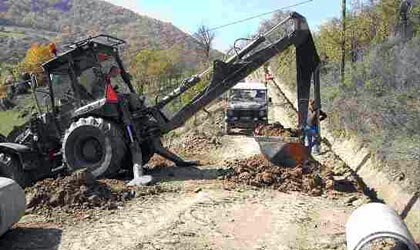
Ingeniørdetachementet er i gang med større vejprojekt sydvest for den danske lejr. Det er et vejprojekt, der blev startet på hold 12 og videreføres her på hold 13. Projektet koordineres af den sektion i bataljonen, der varetager civilt-militært samarbejde og indebærer gravning af grøfter, afretning af vejen og etablering af rørgennemløb. Det er et stort projekt og det forventes at tage 4 uger. Vejen fører op til en lille bjerglandsby, der i perioder med dårligt vejr har været afskåret fra omverdenen.

Ingeniørdetachementet laver vej

Ingeniørdetachementet laver vej. Foto: Dansk KFOR

I Mitrovica ligger en bydel, der kaldes ”Roma Mahala”. Området var tidligere beboet af sigøjnere, men efter krigen i 1999 er de blevet fordrevet fra området. Husene er blevet tømt for alt af værdi, og hovedparten af husene er blevet ødelagt. Bydelen fremstår nu som en spøgelsesby inde midt i Mitrovica.

Det lokale bystyre har i samarbejde med KFOR iværksat en oprydning af dette område. Som en del af projektet skal ingeniørdetachementet destruere resterne af et fire etagers hus ved sprængning.

Huset blev klargjort til sprængning, men så gik der lokalpolitik i tingene og ingeniørerne venter nu på en sprængningstilladelse.

Multinational træning af bataljonens enheder

Anden fase af brigadens træning af enheder i kontrol med uroligheder blev gennemført i denne uge. Fra torsdag til lørdag var store dele af bataljonens enheder samlet til træning i en fransk lejr, hvor brigadens hovedkvarter er placeret.

Bataljonen deltog med forskellige enheder, torsdag og lørdag var det den danske bataljon, der havde ansvaret for føringen af alle enhederne. Det betød samarbejde imellem danske, franske og græske enheder, herunder hundepatruljer, gendarmer og ingeniørsoldater fra fremmedlegionen. Forskellighederne i teknik og taktik blev ensrettet nogenlunde, men den største udfordring var uden tvivl sprogbarrieren. Med tegn og fagter kan man dog komme langt.

Dansk taktik indebærer brug af tåregas for at sprede demonstranterne, så soldaterne kan rykke hurtigt frem og kontrollere området. Brugen af tåregas medfører, at soldaterne skal have gasmaske på. Soldatens mulighed for at orientere sig bliver nedsat og samtidig bliver det betydeligt sværere at trække vejret. Danske soldater kender tåregassens virkning fra tidligere øvelser, men nogle af de franske og græske soldater mente ikke, at det var nødvendigt at tage gasmaske på.

Efter at det danske militærpoliti havde placeret de første tåregasgranater, måtte både de franske og græske soldater erkende, at uden maske går det ikke. Mange soldater måtte simpelthen forlade formationerne og søge til gasfrit område. På en dag, hvor der næsten ingen vind er, så hænger tåregassen længe i luften og mange i den franske lejr fik ”glæde” af den danske tåregas.

Fund af pistol.

Under en kontrol af biler ved de Tre Tårne i Mitrovica fandt en gruppe fra panserinfanterikompagniet en pistol i handskerummet i en bil. Patruljen handlede hurtig og korrekt og tilkaldte militærpolitiet og det lokale politi. Normalt er det lokalt politi og FN politiet, der gennemfører kontrol af biler, men vores patruljer har lov til at standse mistænkelige køretøjer og gennemføre en kontrol.

Såfremt patruljen finder ulovlige våben eller andre ulovlige genstande, skal sagen overdrages til FN politiet og det lokale politi, så eventuelle beviser kan sikres til en senere retsforfølgelse.


ØST KOSÓVA / PRESEVO-DALEN / SYD-SERBIEN


For nemheds skyld bruges betegnelsen Øst Kosóva / Presevo-dalen om det omstridte område med byerne: Presheva, Medvegja og Bujanoci (Albansk stavemåde). Ca. 75 % af befolkningen skønnes at være etniske Albanere - måske omkring 70.000. En modstandsgruppe har været i funktion, men synes nu at være »lukket ned«. Gruppen kaldtes i forkortet form UCPMB (som står for noget i retning af: Ushtria Clirimtare e Presheva, Medvegja dhe Bujanoci; på Engelsk: Liberation Army of Presheva, Medvegja and Bujanoci). Gruppen sagde at den intet havde at gøre med Kosova's UCK, og at den var en lokal gruppe.


Serbisk Koordineringskomité åbner kontor. Den Serbiske Regering skriver:

Bujanovac, Nov 9, 2005 - Head of the Coordinating Body for Bujanovac, Presevo and Medvedja Rasim Ljajic said today that a new office of this body will be opened in Presevo on Monday, with the aim of improving cooperation with the Serbian government.

Following a session which was attended by US Ambassador to Belgrade Michael Polt and Serbian Minister of Interior Dragan Jocic, Ljajic voiced satisfaction with today's meeting and said that ministers of justice and education Zoran Stojkovic and Slobodan Vuksanovic will visit these three municipalities soon to conduct talks with the leadership about problems in the judiciary and education.

Jocic said that an agreement has been reached to include ethnic Albanians into the police corps and enable them to be promoted. He added that the Serbian government will reach a decision tomorrow on opening four small border crossings with Macedonia.

Polt expressed satisfaction with the Serbian government’s work on solving problems in this part of the republic and promised significant help from the US towards improving economic conditions in the three municipalities.

The US ambassador said that in the upcoming year, loans will be approved to many private business holders in Serbia, with the guarantees of the US government.

Participants in the working session of the coordinating body were, apart from the presidents of the municipalities of Bujanovac, Presevo and Medvedja, Nagip Arif, Riza Halimi and Slobodan Draskovic respectively, deputy presidents of the coordinating body Sima Gazikalovic, Milovan Coguric and Branko Delibasic. The main topics were the inclusion of ethnic Albanians in the work of the judiciary and the police, as well as the opening of small border-crossings and economic help.


ALBANIEN


Klik på kortet, hvis du vil have det forstørret / click http://bjoerna.dk/kort/Albanien.gif to enlarge it


Info fra Albaniens Statistik: Befolkningstal: 3,1 Mio (1.1.2004). GDP (Gross Domestic Product): 630 Mia Lek (2002, current prices); GDP-structure: Agriculture: 26 %, Industry 10-11 %, Construction: 7-8 %, Services: 55-56 %. Export: 54 mia lek (2003) [heraf til Danmark: 23 mio lek; størrelsesorden 1,2 mio kr], Import: 226 mia lek (2003) [Heraf fra Danmark: 855 mio lek; størrelsesorden: 45-50 mio kr], Tradedeficit: 171 mia lek (2003). Største import fra Italien (75 mia lek) og Grækenland (45 mia lek), største eksport til Italien (40 mia lek). Unemployment: 14-15 % (2004-III)


Det Engelske Udenrigsministeriums 'Country Advice' til rejsende kan findes på adressen: http://www.fco.gov.uk/servlet/Front?pagename=OpenMarket%2FXcelerate%2FShowPage&c=Page&cid=1007029390590&a=KCountryAdvice&aid=1013618385522. Det Danske UM har pt ingen rejsevejledning, men henviser til det Engelske UM. Den Norske Ambassade kan findes på: http://www.norvegji.org/. Det Amerikanske UM har Juni 2004 offentliggjort en 'Background Note' om Albanien: http://www.state.gov/r/pa/ei/bgn/3235.htm


Mother Teresa: http://bjoerna.dk/albanien/Teresa.htm.


Præsident Moisiu's aktiviteter [Billederne i denne sektion kan som regel forstørres ved at klikke på dem (mens man er på nettet)]:


Præsident Moisiu har besøgt Bogmessen:


November 4, 2005

The President of the Republic, Alfred Moisiu visited tonight the Eighth Book Fair 2005. Accompanied by the Deputy Minister of Tourism, Culture, Youth and Sports Neritan Alibali and the Head of the Albanian Publishers’ Association, Fatmir Toci, the Head of State visited the numerous pavilions not only of our publishing houses, but also those from Kosova, Macedonia and Montenegro. Communicating with the publishers, Mr. Moisiu exchanged views about the level of publishing, about their quality and selection, new titles, the level of our readers’ interests at the present, especially the young ones and also the book market.

At the end of the visit, President Moisiu congratulated the initiators of this Book Fair and stressed: “We are a nation that shows care for the book, which identifies the national values. The book is not only a good friend, but also a very good guide.” Pointing out the presenting of the publishing from Macedonia, Kosova and Montenegro, the Head of State emphasized that the cultural asset is an expression of our national identity and the interest of the youth for the book consists in a very great advantage for us, Albanians.


Eid ul-Fitr. Afslutningen af Ramadan'en. The President of the Republic, Alfred Moisiu wished Eid ul-Fitr Holiday to the Head of the Albanian Muslim Community, Mr. Selim Muça at the Headquarters of this community in Tirana.

November 3, 2005


The President of the Republic, Alfred Moisiu wished Eid ul-Fitr Holiday to the Head of the Albanian Muslim Community, Mr. Selim Muça at the Headquarters of this community in Tirana. While wishing this marked day to the Muslim believers and all the Albanians, the Head of State expressed the conviction that benefaction, peace, understanding and prosperity will become part of the Albanian society.

Mr. Moisiu paused on the role that this belief has played and continuous to play to strengthen the foundations of religious coexistence, harmony and tolerance in our country and the attention that this religion pays to preservation and transmitting of the best traditions and values to the young believers.

“At the day when all the Muslim believers celebrate and wish for a better wellbeing, we cannot help but think to make more efforts to reduce poverty and to raise the living conditions of those levels of the population touched by this.” – stated President Moisiu.


Præsident Moisiu har haft besøg af National Development Movement:


November 4, 2005

The President of the Republic, Alfred Moisiu received today afternoon in a meeting on their request the representatives of the National Development Movement, Mrs. Aferdita Zeri, Mr. Dashamir Shehi and Mr. Uran Metko.

The representatives of NDM presented their concern about the review of the electoral law and the legalization of the informal areas.

President Moisiu, while praising the importance of these problems, stressed that he will support their right solution.

Regarding the proposal made even before to call a roundtable of the political parties, the Head of State stated that it is being worked in this direction.


PM Sali Berisha's aktiviteter:

Uformelt Premierministermøde aflyst. ADN skriver: The informal round table of the Prime Ministers of some Balkan countries, scheduled for Saturday, has been cancelled without defining a deadline, at the request of the Montenegrin Prime Minister Djukanovic, which was the reason preventing Berisha from visiting Kosovo for the second time - Premier of Albania Sali Berisha revealed Friday to the media the reason of the postponement of the Prishtina Summit.


Pressekonference 5.11. Teksten haves kun på Albansk:

Konferencë për shtyp e Kryeministrit Berisha (e shtunë, 5 nëntor)

Lufta kundër korrupsionit është para së gjithash luftë kundër praktikave korruptive. Këto praktika korruptojnë si ata që përfitojnë prej tyre, ashtu dhe ata që qëndrojnë indiferent ndaj tyre. Në kuadrin e luftës kundër këtyre praktikave, të bazuara në babëzi dhe korrupsion, unë siç e dini kisha premtuar gjatë fushatës elektorale përgjysmimin e shpenzimeve koherente në kryeministri, prandaj dhe në fund të muajit shtator, këtu në Këshillin e Ministrave, së bashku me bashkëpunëtorët e mi, vendosëm praktika të reja, një kod të ri etik të huazuar nga kancelari perëndimore, i cili bazohet në përdorimin korrekt të parave të taksapaguesve shqiptarë dhe jo shpërdorimin e tyre.

Dua të theksoj se nga dita që kam ardhur në këtë ndërtesë, deri më sot, nuk kam anulluar asnjë udhëtim, jashtë apo brenda vendit, të bashkëpunëtorëve të mi, apo punonjësve të apararit të Këshillit të Ministrave për qëllime pune. Unë vij para jush për të paraqitur rezultatet e shpenzimeve koherente të Këshillit të Ministrave për muajin tetor dhe krahasimin e tyre me shpenzimet e muajit maj. Në krahasim me muajin maj, shpenzimet për telefoninë fikse dhe mobile, për djeta brenda dhe jashtë vendit, karburante, mirëmbajtje automjetesh, energji elektrike, orë jashtë orarit, janë ulur nga 14.6 milionë, pra nga 146 mijë dollarë në 4.4 milionë lekë, apo 44 mijë dollarë, pra jo 50 përqind siç e kisha parashikuar, por 350 përqind, pra 3 herë e gjysëm më pak se ç’ishin.

Shpenzimet koherente në administratën shtetërore shqiptare kapin shifrën rreth 220 milionë. Unë jam i vendosur që këto standarte, të tëra të kancelarive perëndimore, t’i thelloj më tej, këto standarte t’i shtrij në të gjitha institucionet shtetërore, këto standarte të shndërrohen në standartet e qeverisjes shqiptare. Shuma 220 milionë dollarë nuk është një shumë kaq e madhe, por nuk është një shumë e vogël për Shqipërinë dhe shqiptarët. Mbi të gjitha rëndësi kryesaore ka një kthesë, një ndryshim, një koncept krejtësisht tjerët, perëndimor që duhet të instalohet në të gjitha hallkat e këtij shteti ndaj qëndrimit të parave të taksapaguesve shqiptarë. Unë ju siguroj ju se po punohet me përkushtim të madh për një platformë të gjerë, të gjithanshme, antikorruptive, e cila do t’ju bëhet me dije javët që vijnë. Faleminderit.

Pyetje: Lidhur me krizën energjitike çfarë është bërë konkretisht, veçanërisht në kontaktet me Ukrainën?

Kryeministri Berisha: Z. Ruli ka shkuar atje. Është takuar me kolegun e tij, është rënë dakort që do na bëjnë një ofertë për këta dy muaj dhe pastaj një ofertë afatgjatë. I është kërkuar Turqisë ndihmë dhe shpresojmë që dhe Turqia të ofrojë një furnizim me energji. Dua të siguroj se nuk kemi kërkuar askërkund ndryshe, veçse blerje me çmime të tregut, nuk kemi kërkuar ndihma të tjera përveçse ndimës për t’i shitur Shqipërisë. Ukraina ka një mbiprodhim energjie, problemi i saj është transportimi i energjisë në rajonin tonë, jo sasia e energjisë. Sikundër zëvendësministri i Ekonomisë kthehet nga Rumania dhe do të sjellë rezultatet e bisedimeve që ka zhvilluar. Po bëhen të gjitha përpjekjet për të parandaluar kolapsin energjitik, i cili, theksoj edhe njëherë, është rrjedhojë totale e mosnënshkrimit të marrëveshjeve në maj dhe qershor për importin e energjisë dhe zbrazjes elektorale të digave të hidrocentraleve, jashtë të gjitha kritereve. Po përballemi me nje seriozitet të madh me këtë cështje. Dua t’ju them ju se një nga qëllimet kryesore të udhëtimit tim në New York ka qenë të merrem me çështjen e energjisë. Kam takuar Presidentin e Rumanisë, Kryeministrin Karamanlis për të lejuar transmetimin, presidentin e Bullgarisë dhe janë përgjigjur që të tre thirrjes sime.

Pyetje: A është siguruar konkretisht energji?

Kryeministri Berisha: Ne kemi siguruar energji nga Ukraina, por Greqia nuk është se nuk përballet me veshtirësitë e transmetimit. Duhet të jemi realist, rrjeti i saj energjitik është i planifikuar për Greqinë. Por jam i sigurt se Greqia do ta lejojë transmetimin ehe në vazhdim. Ne kemi importuar energji gjatë gjithë kësaj periudhe, kemi importuar jo më pak se 150 milionë kv. Greqia ka lejuar transmetimin. Ka 3-4 jave që vazhdon blerja nga Rumania dhe Bullgaria.

Pyetje; Duket se për krizën energjitike jemi ende në fazën e kontakteve me shtetet e tjera...

Kryeministri Berisha: Jo, nuk jemi në fazën e kontakteve, jemi në fazën që ne kemi kontratuar së pari rreth 200 milionë dhe tani po vazhdojmë kontratimin e të tjerave. Janë kontratuar tashmë. Ka një problem transmetimi sepse presim që qeveria serbe të lejojë transmetimin. Një fjalë e kanë dhënë por shpresojmë ta konkretizojmë, në mënyrë që të mund të marrim nga të dy drejtimet.

Pyetje: Cfarë e pengon qeverinë serbe të lejojë transmetimin?

Kryeministri Berisha: Nuk kam pse ta paragjykoj. Derisa kanë dhënë një premtim, shpresoj se do ta mbajnë.

Pyetje: A ka afate për zgjidhjen e krizës energjitike në Shqipëri?

Kryeministri Berisha: Po punohet ditën dhe natën për të parandaluar kolapsin. Parandalimi i kolapsit energjitik është objektivi më madhor, sepse faktikisht, siç thashë, nga zbrazja elektorale e digave, mosnënshkrimi i marreveshjeve prill-maj për import energjie në këtë periudhë, nuk mund të kishim rrjedhojë tjetër përveçse një kolapsi total energjitik, në rast se nuk do të kishin qenë veprimet energjike të qeverisë për të garantuar importin nga Bullgaria, Rumania, Greqia për transmetimin - që nuk kishte ndodhur më parë, por po bëhet këto kohët e fundit. Përpjekje të tjera po bëhen dhe unë jam i bindur se nuk do të ketë kolaps energjitik.


Parlamentsvalget i 2005 [Præsidenten vælges af Parlamentet for 5 år, næste gang i 2007]: Se nærmere i: http://bjoerna.net/sidste-nyt/265.htm. ODIHR's afsluttende rapport foreligger nu [i skrivende stund, dog endnu ikke på nettet]. ADN noterer: Premier Sali Berisha promised Wednesday to fulfill the international recommendations given by the OSCE/ODIHR report while the other political parties expressed the need for an electoral reform. – After the publication of the final OSCE/ODIHR report Tuesday, the Albanian government and the political parties have declared the need for another electoral reform to adapt the Albanian elections with the international standards.


Mjaft vil stille op til lokalvalgene i 2006. ADN skriver:

Mjaft

TIRANA – „Mjaft“ (Enough!) movement will soon be presented as a political subject. In fact, this organization which so far has produced a civil opposition towards the negative phenomena of the Albanian society, will soon be registered as a political force. Moreover, it will enter into the race of the 2006 local elections.


Ambassadører. Præsident Moisiu har tiltrådt Regeringens indstilling om udnævnelse af nye Ambassadører i nogle lande, men ikke (eller endnu ikke) tiltrådt udnævnelsen af andre:

Tiltrådt: Vili Minarolli i Grækenland (Minarolli har været Formand for Demokraterne i Tirana). Han efterfølger Bashkim Zeneli.

Endvidere: Mehmet Elezi i Schweiz efter Leontjev Cuci.

Under fortsat overvejelse: Edit Harxhi i USA, Tatjana Kongoli i Østrig og Lublin Dilja i FN.


Repræsentanter for Socialisterne gør forestillinger over for Præsident Moisiu: Tidl. UM Kastriot Islami, tidl. Vice-PM Namik Dokle, tidl. UM Arta Dade


Fra Socialisternes side kritiserer man udnævnelsen af Edit Harxhi; pgl. skulle være uerfaren mht diplomatisk virksomhed.

Lublin Dilja siges at have optrådt på en uheldig måde som Viceambassadør i FN - og menes på det seneste at have trukket sit kandidatur tilbage af helbredsmæssige grunde, men givetvis også på grund af den rejste kritik.


Om Albanien's optagelse i EU, se under: EU.

Elektricitet / El-forsyning: RFE skriver:

Albania's central bank suggested on 3 November that planned daily power outages lasting up to 12 hours are likely to harm the Albanian economy and stifle growth, Reuters reported the same day. Albania announced power cuts of up to 12 hours earlier this week, after limited rainfall put water levels below the "death point" when turbines stop. "The intensity of this crisis and how much it will affect Albanian businesses will determine whether the target of 6 percent growth for 2005 can be met," the central bank said in a statement at the end of a two-day meeting. Central bankers urged Albanian officials to minimize the country's dependence on the rainfall necessary to keep hydroelectric dams functioning. More than two-thirds of the 20 million kilowatt hours of electricity that Albania uses every day comes from hydroelectric dams, while the remainder is imported. Environmentalists have opposed plans to build thermal plants in the southern town of Vlore. BW


»Tirana Times« skriver:

TIRANA, Nov. 2 – Albania’s power shortage deepened this week with drastic power cuts seen in the entire country, including the capital, were some neighborhoods were without power for an average of seven hours per day. The government decided on Wednesday to allow state-owned Albanian Power Corporation to spent EUR 8.5 million in emergency funding to buy electricity in Romania and Bulgaria for the last two months of this year. The government used a direct procurement contract, which means the sale wouldn’t get bogged down in the tender process. KESH and Albanian Minister of Economy and Energy Genc Ruli had earlier told the media consumers should expect drastic power cuts due to falling levels of production at home and inability to import electricity while demand soars.

Trouble importing energy

KESH says it is unable to satisfy domestic because it has been unable to import the needed electricity due to a series of technical and legal problems. Ruli told a parliamentary commission last week that the energy crisis will deepen if Albania doesn’t find additional import sources immediately. The Albanian government decided to purchase power anywhere it can, but the task is proving difficult because other countries in the region are also facing energy shortages, Ruli said. The price of electricity has also gone up 30 to 50 percent since the beginning of the year, according to Ruli. Importing energy was made more difficult by the fact that the current law says that more than one bidder needs to be present in order for the cooperation to buy energy from abroad. Four previous tenders to buy electricity from abroad have failed in recent months. Ruli said the previous government was partially to blame for the crisis because it did not plan to supply the country with electricity for the whole year.

Domestic production falls

Other reasons for the crisis include lack of water at the Fierza Hydroelectric Plant, lack of payment by consumers as well as lack of investments in the sector. Fierza Lake, which also serves as a regulatory body of water for two more hydroelectric plants downstream, is fast approaching the level where production has to stop. Domestic production was expected to get a boost with the end of repair work at Vau i Dejës Hydroelectric Power Plant, one of Albania’s largest. It had suffered damage after a fire there in June. Ruli says the only real way to overcome ongoing energy crisis is to invest EUR 1.5 billion in constructing 10 new electrical plants

An ongoing problem

Power cuts due to technical failures or lack of needed resources to satisfy demand are a common occurrence in Albania, although things have improved in recent years. Albanian businesses often cite electricity interruption as one of the main challenges of doing business in Albania. Albania’s electricity demand increases by 10 percent annually, which has far outpaced the ability of Albania to produce electricity in its dilapidated hydroelectric plants. KESH, a state-owned energy monopoly, will probably be privatized in 2006, and the first stages of the process have already started.


Mjaft skriver:

Tirana, November 8 – MJAFT! Movement inaugurated today (Tuesday, November 08) the “Herald” television, the television with the highest number of viewers in the lack of the electric power. Tens of citizens and activists of the MJAFT! Movement followed live the news of “Herald TV” from the spontaneous studio of this television, in the park in front of the International Culture Center, next to the Prime Minister offices.

The newest television in the myriad of the Albanian televisions, has an obvious advantage, compared to the “competition”: the independence on the energetic situation in the country. “Herald TV” uses the old technique of giving the news by shouting loudly, accompanied with drums and trumpets to attract attention. This television will broadcast every day, starting from 1 o’clock PM.

The location of “Herald TV” is only a few meters away from the offices of the Prime Minister, what enables the quick broadcast of the news to the Albanian executive.

The programs of “Herald TV” include news, selected music, children programs, interviews and football matches. During the programs of this television, the citizens can freely express their thoughts and opinions regarding different problems they face.

“This is a good help not only for the community, but also for the government,” said Besjan Pesha, activist of the MJAFT! Movement, during an interview for “Herald TV”. “Having continuous lack of electricity, Herald TV offers some space even for the Prime Minister and his advisers, in order for the Albanian citizens to be well informed about the situation in the country.”

Herald TV will continue to broadcast its programs also during the following days, until the situation of electricity will be normalized.


Økonomi. Konkurrence. 'Good Governance'. Nationalbankdirektøren har holdt tale herom:

Increasing the effectiveness of supervision and monitoring on financial intermediaries (With a particular focus on competition issues and improving governance)

Speech by the Governor of the Bank of Albania, Mr. Ardian Fullani, at the Euromoney 5th Regional Finance and Investment Conference for South East Europe, Dubrovnik, October 25 - 26, 2005

Dear participants,

I am pleased to be holding this speech on such an important topic, like that of supervision of financial intermediaries. I will start with some general remarks about competition, market infrastructure and the corporate governance, and the role they play in the effective supervision of these institutions, and I will also mention the experience we have in Albania on the issue.

Banks are the typical institutions that one can think of when meeting with the concept of “financial intermediary”. This is not only due to the public appearance and interaction of such institutions, but it is rather affected by the weight the banking system has on the financial market as a whole, particularly in the developing countries. Consequently, the awareness among the public of the function that banks play in the development of the economy, by channelling funds from the savers to the interesting borrowers, is relatively easy to be seen and understood. By understanding the role of banks, the relevant public segments find it easier to increase the financial knowledge about other financial intermediaries that operate in the market. These institutions, which have the ability to intermediate among those that supply the money to those that can better use it, nowadays compose almost the entire mosaic of a developed financial market. One can mention non-bank financial institutions, savings and loans associations, different types of funds etc., whose sometimes complex operations rely on a very traditional concept of intermediation.

As the financial market develops, many issues come forward as challenges for the market players, market regulators and authorities in the country. These issues encompass the ability of the market players to structure themselves from within and the capacity that they will show at adjusting their business toward the increased interaction with other more developed markets and institutions. In more simple words, this is nothing but finding the equilibrium on tightening the competitive environment. Competition is desirable and aimed at, because it forces the market players to run their operations in a way which is as effective and efficient as possible, with generally very positive effects on the quality and costs of services and products offered to the public. But one should be aware of certain risks that associate competition, whose magnitude and possibility of materialisation is linked to the current situation of the market. The positive effects of competition are fully materialised in the medium to long-term periods. It is then, when the market has identified its viable institutions that have been able to adjust to new market conditions, and when the scale of extension of new competitive products and services to the public maximizes. In the short-term, in some instances, the effects of a sudden and harsh competition can prove to have totally different effects. Financial institutions can close down part or the entire of their business, large public communities can be deprived of financial services in those areas that are considered “remote” related to the economic development, prices of products can be increased instead of going down, as the financial institutions will use the asymmetric information advantage in the changing market situation. Hence, it is important that competition finds the market and the authorities appropriately prepared and that the process as a whole goes fast enough as to keep “the competition train” in the proper railway that is known and assessed by the authorities and the regulators.

The process of adjustments to the changing environment by the market players will be affected by the current composition of the market. Under the conditions of an asymmetric composition, the process of adjustment may become more difficult. The differences in market share, in the scale of extension of products and services to the public, in the financial performance of the institutions may exacerbate rather than fade gradually away. We shall be, in this case, entering a self-fulfilling vicious circle, that will increase deficiencies in the market. The dependence of the developments on the financial indicators, and on the intermediation capacity of the financial market, will be on a single institution or a handful of them. On the other side, it would be very fortunate that the dominant institution(s) is active enough as to push for a competitive behaviour in the market, but the opposite could be quite true. Big institutions, can serve of their size to keep a passive attitude toward the market needs for development or on the worst case, abuse their position. It is thus, very important for the regulator to set up a regulatory framework that would support a supervisory practice that aims at identifying factors which hamper a sound and competitive environment in the market place. Asymmetric composition of the market makes the need for communication and cooperation with other supervisory entities a “must”. At the same time, a consistent and productive dialogue process should be kept with all the relevant market players, in order to get their viewpoints on current or expected market developments with impact on competition conditions.

Everyone’s task is significantly made easier, if you have responsible management in the financial intermediaries. This is important despite the regulatory framework that exists for different market segments; in fact the opposite holds true, having responsible management helps at covering the deficiencies that exist in the respective regulatory frameworks. Ensuring and protecting an open environment of investment, setting up requirements about the management of financial intermediaries but leaving them the proper responsibility of running the institution, asking for control systems in these institutions, setting up rules and procedures for the transparency and accountability of the institution management and building a constructive communication relationship are preconditions which help the sound governance at the level of financial intermediaries.

In Albania, the characteristics of the market development of the financial intermediaries are those of a typical developing country. There have been positive developments in these last years regarding the type, the quality of services, the soundness of financial indicators, and the competition of the financial intermediaries. We believe that these developments are the outcome of a suitable supervisory framework, which on its side, developed in parallel with the market. The Bank of Albania is responsible for supervising the banking sector, some types of non-bank financial institutions, savings and loans associations, foreign exchange bureaus. The insurance market and the securities market are supervised by two other different supervisory authorities. The level of interaction among the different segments of the market players is increasing rapidly, and so has the cooperation among the many supervising authorities. There is a discussion going on regarding the possibility of integrating the supervisory authorities of the insurance market and that of the securities market. The reasons relate to the need of integrating in a market which does not have enough activity and strengthen the supervisory work. Later on, when the standard of supervision reaches that of the Bank of Albania on the banking sector, more considerations will be given to setting up a single supervisory authority for the whole financial market.

Our supervisory framework of the banking system provides for a competitive environment in the market place. There are no restrictions on investments in the banking sector, regarding the nationality of the capital, the type of the institution (subsidiary or branch), the number of the institution in the market etc. Moreover, we still treat subsidiaries and branches of foreign banks the same way, that is, the financial supervisory indicators have the same meaning for both of them. As part of our licensing procedures we request data on the capital source, shareholders activity and sustainability of that activity, etc. We provide and require cooperation with other supervisory authorities, domestic or foreign, as part of our licensing and supervisory process, abiding strictly to requirements of confidential information usage. We have also requirements regarding the regulatory capital and capital adequacy, exposures to single entities and operations of the banks with the related persons, anti-money laundering requirements, the management of banks (and other licensed institutions) etc. Our approach of supervisory practice includes on-site inspections and off-site analysis. Changes have also occurred on the technology infrastructure which is used by banks on the payment area. There is now a modern system in function for real time gross settlement of payments, as well as another one for the small-value payments. Both systems are integrated with each other and the banks networks. As a result of such an environment, we have today 16 operating banks, in good financial conditions and with supportive shareholders. The role and the weight of the banking sector in the market place are increasing and the quality of products and services is progressing quickly. We do have a supervisory framework for other licensed institutions as well, which is also in the process of change and modernisation.

At the beginning of this year, the Albanian financial market underwent an assessment process performed by the World Bank and the International Monetary Fund, otherwise recognized as FSAP, whose results were realistic and generally positive. On the banking sector, the findings were very good, especially those related to the supervisory framework and the financial strength of the system. There were also given certain recommendations, which we found right and for which we are going to work to their accomplishment. A summary of that report can be found in the website of these institutions.

Finally, I want to say that the efforts that we make on an individual country level need to be harmonised and combined through a process of regional dialogue and communication. We have tried to be active in this direction, as well. In the beginning of April this year, we organized an international workshop on “Stress-Testing”, along with the International Monetary Fund, whose participants came from almost all the countries in Central and Eastern Europe. We shall continue on this path, as we think it is important to reach a common understanding on the supervisory issues, to achieve harmonisation of supervisory standards through the entire region with those of the EU area, to provide fair and stable market conditions for our entities and to make our markets and institutions more risk averse.


Solenergi / Solceller / OSCE har i Oktober givet anlæg til Politiet og skriver:

OSCE Presence donates solar generators to Albanian border and migration police

TIRANA, 18 October 2005 - The OSCE Presence in Albania and the Albanian Government today signed a Memorandum of Understanding on the donation of eight solar generators to the country's Border and Migration Police.

"These solar panels are expected to meet the minimum emergency power needs of police stations at eight Albanian border crossing points, allowing them to operate without interruption even during power cuts," Ambassador Pavel Vacek, Head of the OSCE Presence, said at the signing ceremony.

The initiative is funded by the governments of the Czech Republic and France. The Memorandum of Understanding was signed by the Albanian Deputy Minister of Interior, Gjergj Lezhja, and Ambassador Vacek at the Hani i Hotit border crossing point in the Shkodra region.

The donation aims at improving the communication flow between the Special Operation Groups and the regional and central police authorities, as well as the working conditions and security practices at Albania's border crossing points. The project in this stage is worth 50,000 euros and is part of the Presence's programme to support Albania's Border and Migration Police.

In addition to Hani i Hotit, the Presence will install solar generators and auxiliary equipment at the border crossing points of Muriqan and Vermosh. By the end of this year, five other border sites will receive equipment.


Børns vilkår. SET skriver: UN urges Albania to develop child protection system. The UNHCR's special rapporteur on the sale of children, child prostitution and child pornography, Juan Miguel Petit, urged Albania Tuesday (8 November) to develop a national child protection system that would combat poverty, sexual exploitation and trafficking. Wrapping up a visit to Tirana, Petit acknowledged legislative improvements but said a "strong" child protection system must be put in place together with "firm social services". He cited poverty, a lack of opportunities, stigmatised minorities, discrimination against women, and an inadequate educational system as the main causes of the problem. (UN Web site - 08/11/05)


Ungdomskriminalitet. OSCE og 'Magistrates School' har arrangeret seminar:

OSCE Presence and Albania's Magistrates S